Add and Use Multiple Exchange Accounts in iPhone 2


Posted on techpetals.com
Original title: Add and Use Multiple Exchange Accounts in iPhone 3.1.3, 3.1.2

One of the main features of of iPhone OS 4.0 is that it enables you to add multiple exchange accounts in iPhone making reading emails from multiple accounts easier. Did you know you could also add multiple email accounts in iPhone 3.1.3, 3.1.2 or even earlier versions? Thanks to AddExchange app available in Cydia. Follow the steps:

  1. Search Cydia for “AddExchange”
  2. Download and install AddExchange app from Cydia.
  3. Run the AddExchange app
  4. Hit the “+” button. This will add a new email to Exchange with the name “SRV2”.
  5. Now go to settings and change the defaults for SRV2 with your own email account details.

That’s it. Loop these steps as many times as much accounts you wish to add to Exchange. So, if you are looking to install iPhone OS 4.0 just to be able to add multiple Exchange accounts, think again. Just to notify, you need to have to jailbreak iPhone to run Cydia on your device, so obviously AddExchange can run on jailbroken iPhone only.


How to Manually Configure Outlook 2007 to Connect to Exchange Online


Posted on MessageOps
by DanTrautman, August 3, 2010

This will allow you to configure Outlook 2007 manually for companies that do not want to, or cannot, install the Sign On client.

Please understand the caveat of not having the Sign On client: you will not have access to AutoDiscover due to the Sign On client not downloading the required certificate.  This will prevent you from accessing the Offline Address Book (OAB), Free/Busy information (used for meeting invites), and Out of Office (both Out of Office and Free/Busy can be viewed in OWA).

1. Open the Mail Control Panel item

Microsoft Exchange Online - Outlook Mail Icon

2. Click Show Profiles

Microsoft Exchange Online Show Profiles

3. Click Add

Microsoft Exchange Online Click Add

4. Name the profile appropriately and click OK

Microsoft Exchange Online Choose Profile Name

5. Check “Manually configure server settings or additional server types” and click Next

Microsoft Exchange Online Manually Configure Server Settings

6. Select Microsoft Exchange and click Next

Microsoft Exchange Online Microsoft Exchange Mailbox

7. Enter the following in the Microsoft Exchange Server textbox (different for each DataCenter):

VA3DIAXVS011.RED001.LOCAL (North America)
IE2DIAXVS011.RED002.LOCAL (Europe)
SG1DIAXVS011.RED003.LOCAL (Asia/Austrialia/Japan)

Make sure that “Use Cached Exchange Mode” is checked

Microsoft Online Server

8. Click More Settings

You may receive an error indicating that the connection to the server is unavailable; ignore this and click OK twice until you are at the General tab.

9. Click on the Connection tab

10. Check “Connect to Microsoft Exchange using HTTP” and click Exchange Proxy Settings

Connect to Exchange Online using HTTP

11. Enter the following in the field “Use this URL to connect to my proxy server for Exchange:

RED001.MAIL.MICROSOFTONLINE.COM (North America)RED002.MAIL.EMEA.MICROSOFTONLINE.COM (Europe)RED003.MAIL.APAC.MICROSOFTONLINE.COM (Asia/Australia/Japan)

12. Check “Only connect to proxy servers that have this principal name in their certificate:”

13. In the textbox below enter the following:

MSSTD:*.MAIL.MICROSOFTONLINE.COM (North America)MSSTD:*.MAIL.EMEA.MICROSOFTONLINE.COM (Europe)MSSTD:*.MAIL.APAC.MICROSOFTONLINE.COM (Asia/Australia/Japan)

14. Check “On fast networks, connect using HTTP, then connect using TCP/IP”

15.  Make sure that, under Proxy authentication settings NTLM Authentication is selected.
Microsoft Exchange Online Proxy Settings

16. Click OK until you are back to the Wizard, then click Next, then Finish.

17. You can now launch Outlook and select the profile pertaining to your account

You will be prompted for credentials when launching this profile
The Username will be the user’s email address.


High frequent terms in international trade

C&F: cost+freight

T/T: telegraphic transfer

D/P: document against payment

D/A: document against acceptance

C.O: certificate of origin

G.S.P.: generalized system of preferences

CTN/CTNS: carton/cartons

PCE/PCS: piece/pieces

DL/DLS: dollar/dollars

DOZ/DZ: dozen

PKG: package

WT: weight

G.W.: gross weight

N.W.: net weight

C/D: customs declaration

EA: each

W: with

w/o: without

FAC: facsimile

IMP: import

EXP: export

MAX: maximum

MIN: minimum

M or MED: medium

M/V: merchant vessel

S.S: steamship

MT or M/T: metric ton

DOC: document

INT: international

P/L: packing list

INV: invoice

PCT: percent

REF: reference

EMS: express mail special

STL.: style

T or LTX or TX: telex

RMB: the Chinese currency

S/M: shipping marks

PR or PRC: price

PUR: purchase

S/C: sales contract

L/C: letter of credit

B/L: bill of lading

FOB: free on board

CIF: cost, insurance + freight

C.O.O: certificate of original

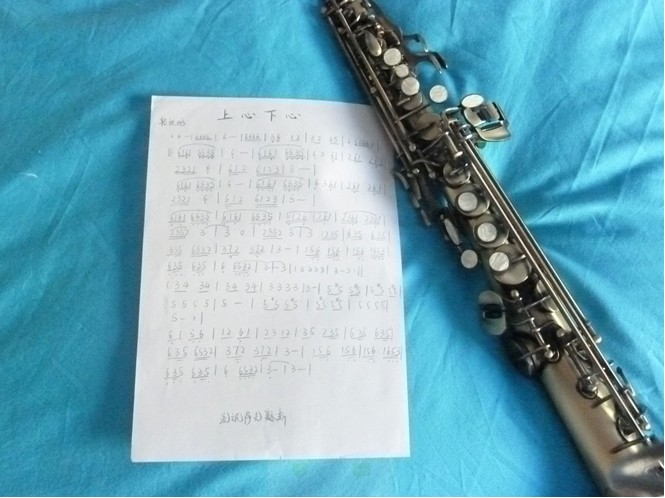
Saxophone score sheet for Perturbed (Tan Te)

The so called “magical song” Perturbed (Tan Te) is singed by Gong Linna – a pioneer in China, creating an individual, new Chinese Art Music. She is transforming the lightness of traditional Chinese melodies and the “Qi” (energy/breath) of centuries old Qin-compositions into new songs in a contemporary production. (From http://www.gonglinna.com/index.html)


From http://www.gonglinna.com/video.html

Gong Linna was born in Guiyang, Guizhou province (located in the Southwest of China). She first appeared on stage at the age of five. Since her early childhood she knew that she wanted to become a professional singer.

Gong Linna on stage

Gong Linna on stage

At 16 she began her studies at the Chinese Conservatory of Music where she held her first and highly acclaimed concert as soloist in 1999. Since that she has been a soloist with the Zhongyang Minzu Yuetuan, China’s most renowned traditional music orchestra. In addition to many other awards, she won the Chinese National Singing Competition in 2000 as best female singer, including the Special Audience Award, gaining the audience votes of over a million Chinese television viewers.

In 2002 year she met composer and producer Robert Zollitsch (Lao Luo), who had already established himself as one of the masterminds of New Chinese Art Music, and collaborating with him she started a new artistic life. Experiments with world-music-fusion and avant-garde music as well as ethno-musical fieldwork marked the next years. In 2003 Linna contributed to the album of “Wu Xing”, published on CRC. On this album Linna gave her debut as song-writer with beautiful lyrics. Her next album “Zou Shengming de Lu”, published 2005 by KUKU-Music, finally set a landmark in Chinese Art Music. Since 2006 Gong Linna is performing with a stunning chamber music ensemble formed by some of China ‘s best instrumentalists and has been performing on many international festivals and prestigious concert halls. Her latest album “Ye Xue – Night Snows” features many classical Chinese poems set to music.

It has been a long time I tried to find the music score of Perturbed (Tan Te) for Saxophone play. Luckily, Ginobilong recently posted his play as well as music score on his Blog.

Here is his play

And here is the accompaniment, which can be downloaded here

[audio:http://blog.ikou.me/wp-content/uploads/Tante.mp3|titles=Tante]

The above music score and accompaniment match for probably only for Tenor saxophone but not alto Saxophone, which needs further test.

April 24, 2011
Today I found a more complete score sheet of Perturbed (Tan Te) on http://tieba.baidu.com/f?kz=976313165:

Unilever bows to Beijing pressure: a new regulatory risk in an inflationary climate


From “Financial Times
Original Title: Unilever bows to Beijing pressure by putting off planned price increases
By Patti Waldmeir in Shanghai, Robin Kwong in Taipei, Alexandra Stevenson in London

Unilever, the Anglo-Dutch consumer goods group, has bowed to pressure from Beijing to delay planned price increases, highlighting a new regulatory risk in an inflationary climate.

While Chinese authorities routinely force state-owned enterprises to place the public interest ahead of commercial concerns, Unilever’s confirmation of the government’s request signals that large foreign multinationals are not immune to such pressure.

A Unilever spokeswoman in London said, “I can confirm that Unilever China received a request from the National Development and Reform Commission and has chosen to comply with it, and postpone price adjustments previously scheduled for April 1.”

Chinese consumers, increasingly alarmed at the rising cost of living, cleared supermarket shelves earlier this week of shampoos, soaps and detergents after state media said four consumer goods companies – including Unilever and Guangzhou Liby Enterprise Group – would raise prices by 5 to 15 per cent.

Alarmed by the reaction, Beijing is understood to have contacted companies to urge price restraint. China’s consumer price index rose 4.9 per cent year-on-year in February.

“When you wake up and see photos of old people rushing into supermarkets in a panic, that is a signal to government that this is a serious problem,” said Shaun Rein of China Market Research in Shanghai.

Alongside Unilever, Liby – another leading detergent producer – and Tingyi, which produces half of China’s instant noodles, agreed to delay planned price rises.

Tingyi said it acted “in alignment with the policy of the state for maintaining the stability of commodity prices”. Wei Ing-chou, chairman and chief executive, had spoken of the need to “watch which way the [political] wind blows”, when announcing the rise but, explaining the delay on Friday, the company pointed to signs that raw material prices were stabilising.

Luo Zhiping, analyst with Business Information Research, a Shanghai-based consulting firm with close ties to government, said the goal was to “prevent consumer chaos” after widespread panic-buying of salt, which was viewed as an antidote to potential radiation from Japan’s earthquake-crippled nuclear power station. By firing this shot across the bows of companies whose planned price increases were widely publicised, Beijing should be able to convince a wide range of companies to contain most prices, at least temporarily, he said.

Unilever would not say how long it would postpone the price rise.

Liby said that after being contacted, it had decided “to take the whole situation [of the market and consumer reaction] into account” and delay or even rescind price increases that had already been put in place.

From “Financial Times
Original Title: Unilever bows to Beijing pressure by putting off planned price increases
By Patti Waldmeir in Shanghai, Robin Kwong in Taipei, Alexandra Stevenson in London

Content Protected Using Blog Protector By: PcDrome.